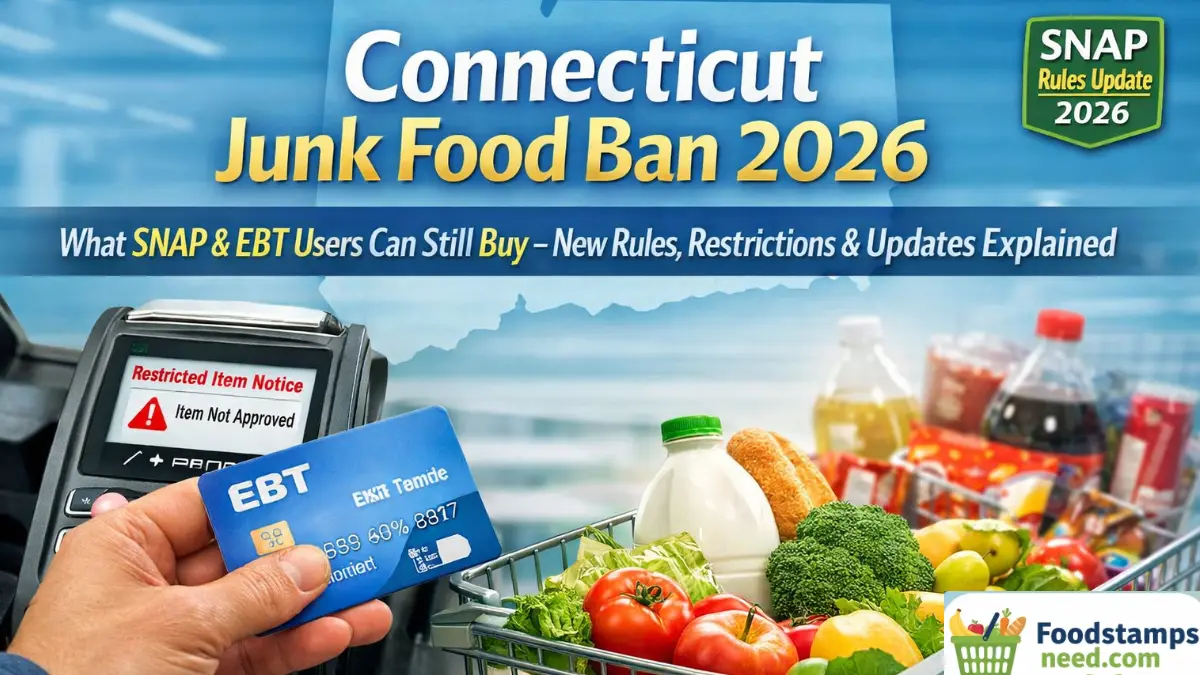
The new Connecticut SNAP junk food restrictions are about possibly stopping some unhealthy foods items from being bought with SNAP benefits or EBT amounts.
A lot of households in Connecticut are asking queries like:
- Can I still buy soda with SNAP?
- Will candy and chips get banned?
- Are EBT rules changing in 2026?
- What foods are still approved?
Right now, there is no complete fast food ban in Connecticut with EBT card. Most SNAP food policies still follow federal USDA rules. But there are discussions about making EBT benefits purchases healthier in the future.
Many Households in Hartford, Bridgeport, New Haven, Stamford, and Waterbury are especially paying attention because these updated rules could affect foods shopping and monthly groceries budgets.
What Are Connecticut SNAP Junk Food Restrictions?
These restrictions are ideas or proposals that may limit unhealthy food purchases made with SNAP benefits.
The foods usually discussed include:
- Sugary soda
- Candy
- Chips
- Energy drinks
- Processed snacks
- Sweet desserts
The main purpose is to support people of connecticut purchase healthier food items and reduce health issues caused by too much sugar and junk food.
Short Answer
Most processed foods are still allowed with food stamps in Connecticut unless the USDA officially approves new restrictions.
Can SNAP Buy Soda in Connecticut in 2026?
Yes, in most cases EBT users can still purchase soda in Connecticut during this year.
Mostly people online are spreading rumors saying soda is already restricted on EBT card, but that is not real right now.
The USDA still allows many sugary drinks under current food stamps rules.
Why Soda Restrictions Are Being Discussed
Some health experts believe:
- Soda has too much sugar
- Sugary drinks can increase obesity
- Children may face more health problems from unhealthy diets
But other people believe:
- Families should choose their own groceries
- SNAP users should not feel controlled
- Grocery shopping should stay simple
Foods Potentially Affected by SNAP Restrictions
The following food items are often mentioned during SNAP restriction discussions.
| Food Category | Current SNAP Status | Restriction Risk |
| Soda | Allowed | High |
| Candy | Allowed | High |
| Chips | Allowed | Medium |
| Energy Drinks | Some Allowed | Medium |
| Ice Cream | Allowed | Medium |
| Sugary Cereals | Allowed | Medium |
| Snack Cakes | Allowed | Medium |
Foods That Remain Clearly Eligible
These food items are still considered normal EBT-approved grocery products:
- Fruits
- Vegetables
- Bread
- Rice
- Milk
- Eggs
- Chicken and meat
- Fish
- Pasta
- Frozen vegetables
- Peanut butter
Why Connecticut Wants SNAP Food Restrictions
The biggest reason is public health.
Major Reasons Behind Proposed Changes
1. Childhood Obesity Concerns
Doctors and health groups worry that too much junk food can cause:
- Weight gain
- Diabetes
- Heart disease
- High blood pressure
2. Better Nutrition
Some lawmaker believes SNAP should support families buy healthier food instead of junk snacks.
3. Lower Healthcare Costs
Unhealthy eating may increase medical costs in the future.
4. Healthy Food Programs
Connecticut also supports programs that encourage healthier eating, such as:
- Farmers market EBT programs
- Fresh fruits and vegetable offers
- Healthy grocery discounts
These programs try to improve nutrition without fully banning food items.
USDA SNAP Rules Still Control Most Food Eligibility
SNAP benefits is a federal initiative controlled by the USDA Food and Nutrition Service.
This means Connecticut cannot completely change SNAP food rules by itself.
Current SNAP Restrictions Nationwide
SNAP cannot buy:
- Alcohol
- Cigarettes
- Vitamins
- Supplements
- Hot prepared foods
- Cleaning products
- Pet food
Why Junk Food Is Still Allowed
The USDA has not fully banned junk food because:
- It is difficult to define “junk food”
- Grocery systems are complicated
- Different foods have different nutrition levels
- Rules may confuse shoppers
Could Connecticut Request a USDA SNAP Waiver?
Yes, Connecticut can ask the USDA for permission through something called a waiver.
A waiver could allow the state to:
- Restrict soda purchases
- Limit candy
- Test healthier SNAP rules
- Start nutrition pilot programs
But the USDA must approve these changes first.
How SNAP Food Restrictions Would Work at Checkout
If restrictions happen in the future, the EBT system would probably block restricted foods automatically.
Possible Implementation Methods
Barcode-Based Restrictions
The grocery store scanner could identify restricted products by barcode.
Category Filtering
Entire product groups like soda or candy could become blocked.
Nutrition Threshold Systems
Foods with high:
- Sugar
- Sodium
- Saturated fat
might become ineligible.
Real Grocery Store Scenarios
Example 1: Hartford Grocery Store
A person buys:
- Bread
- Apples
- Milk
- Soda
If soda restrictions ever begin:
- Healthy foods may still work on SNAP
- Soda may get declined automatically
Example 2: Convenience Stores in Bridgeport
Convenience stores could face issues because many based on snack and soda sales.
Connecticut Cities Most Likely to Feel the Impact
Hartford
Hartford SNAP users may notice the biggest impact because many families use SNAP benefits there.
Bridgeport
Small convenience stores may need to change inventory if restrictions happen.
New Haven
Different neighborhoods may react differently depending on grocery access.
Waterbury
Some families may struggle if cheap processed foods become restricted.
Stamford
Large food stores may adapt faster by offering healthier discounts.
What Foods Are Not Allowed on SNAP?
Many people confuse current SNAP rules with future junk food proposals.
These items are already banned nationwide:
| Not SNAP Eligible | Reason |
| Alcohol | Federal restriction |
| Cigarettes | Federal restriction |
| Vitamins | Non-food classification |
| Hot deli meals | Prepared food rule |
| Soap & detergent | Non-food item |
| Pet food | Non-human food |
SNAP vs WIC: Important Difference
SNAP and WIC are different programs.
| Program | Purpose | Food Restrictions |
| SNAP | General grocery help | Flexible |
| WIC | Nutrition support for women and children | Strict |
WIC already has stronger food rules, while SNAP gives families more freedom.
Healthy Alternatives SNAP Families Can Choose
Many households are already trying healthier food selections.
Budget-Friendly Healthy Foods
Affordable healthy foods include:
- Oatmeal
- Beans
- Eggs
- Frozen vegetables
- Tuna
- Brown rice
- Yogurt
- Bananas
- Peanut butter
Instead of Sugary Drinks
Families can try:
- Flavored water
- Unsweetened tea
- Sparkling water
- Low-sugar juice
Common Myths About Connecticut SNAP Restrictions
Myth: Connecticut Already Banned Soda on EBT
False. Soda is still allowed in most cases.
Myth: Candy Is Illegal With SNAP
False. Candy can still usually be purchased.
Myth: All States Changed SNAP Rules
False. Most SNAP rules still follow USDA federal guidelines.
Myth: Grocery Stores Make Their Own SNAP Rules
False. Stores follow USDA and EBT system rules.
Retailers and Grocery Stores May Face Challenges
If restrictions happen later, stores across Connecticut may need:
- Software updates
- New checkout systems
- Employee training
- Product changes
- Inventory updates
Convenience stores may face the biggest problems because they sell many snacks, junk food and sugary drinks.
What Connecticut SNAP Recipients Should Do in 2026
1. Follow Official Connecticut DSS Updates
Always check official updates instead of trusting random social media posts.
2. Learn Current SNAP Rules
Most normal grocery foods are still approved.
3. Use Healthy Food Programs
Some Connecticut programs help families buy:
- Fruits
- Vegetables
- Fresh foods
for lower prices.
4. Watch USDA Announcements
Federal USDA decisions control most SNAP food rules.
Could Other States Follow Connecticut?
Other states are also discussing healthier SNAP programs.
Some states often mentioned include:
- Texas
- Arkansas
- Idaho
- New York
- California
If Connecticut receives USDA approval in the future, other states may try similar rules too.
What Happens Next?
The future of Connecticut SNAP junk food restrictions depends on:
- USDA decisions
- Federal policy changes
- State approvals
- Public health research
- Political support
Right now, many EBT users can still get many snack foods and sugary drinks under current new rules.
But matters about healthier SNAP programs will probably continue after this year as well.
Helpful Resources
- Connecticut SNAP Program (Official DSS)
— Official changes on SNAP eligibility, benefits, and rule changes. - USDA SNAP Program (Federal Guide)
— National SNAP rules and changes. - Complete EBT Guide by State (All 50 States)
— easy access to SNAP & EBT information across the U.S. - SNAP Food Restrictions by State (2026 Updates) — Compare food rules, bans, and SNAP changes at state level.
FAQs (Connecticut Food Stamps Restrictions)
Can SNAP buy soda in Connecticut in 2026?
Yes. Soda is still eligible with SNAP benefits unless future restrictions are approved.
Is Connecticut banning junk food on EBT?
No complete statewide ban exists right now.
What foods are not allowed with SNAP in Connecticut?
Alcohol, cigarettes, vitamins products, ready made meals, home used products, and pet or cat food items are not allowed.
Can you buy candy with food stamps?
Yes, candy is usually still SNAP eligible.
Will EBT stop covering chips?
No official chip ban currently exists in Connecticut SNAP.
Can EBT buy energy drinks in Connecticut?
Some energy drinks qualify for EBT benefits if they are labeled as beverages.
Does Connecticut need USDA approval for SNAP restrictions?
Yes. The USDA must approve major SNAP food rule updates.
Are frozen foods covered by SNAP?
Yes. Most frozen food items are still eligible with SNAP.
Can farmers markets accept SNAP in Connecticut?
Yes. Many Connecticut farmers markets accept EBT cards.
Why are SNAP junk food restrictions controversial?
Some families wants healthier eating rules, while others believe peoples should choose their own food items
Conclusion
Connecticut SNAP food restrictions are still under discussions and not approved yet, not full statewide bans.
Now, most EBT purchases still follow federal USDA updates, meaning soda, candy, chips, and many fast foods remain eligible with EBT card.
Families using SNAP in Connecticut should:
- Follow official Connecticut DSS updates
- Learn current EBT food rules
- Ignore false social media rumors
- Use healthy food programs when possible